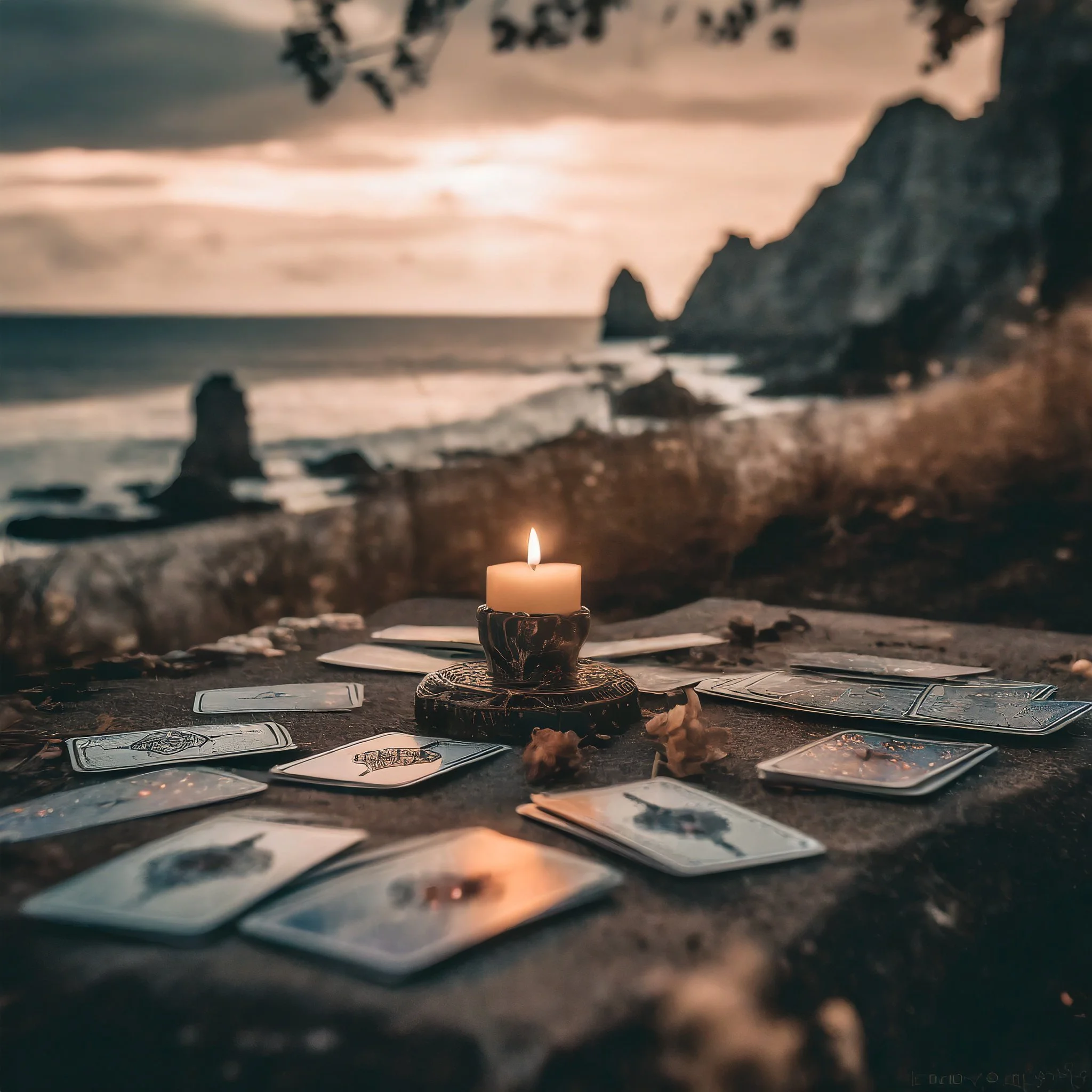
People ask what a Völva does.
Simply, Seiðr is the seeing. Galdr is the singing. Between them is the craft: the chart read and the timing chosen, the remedies fitted to the sky, the herbs and incense, the prayers to the goddesses, and the rites, for those who are ready. The Völva sees the threads beneath you, and we gather them together or untangle them, so the whole self can be tended and braided anew.
That's the short answer. This is the long one, for those of you who like to see the whole structure before you trust it. You build things, and you can feel when something is load-bearing and when it's decoration. So I'm going to show you the beams.
The Seeing: Seiðr
The best description we have of a Völva at work comes from Greenland, about a thousand years ago. Eiríks saga rauða tells of a hard winter at Herjólfsnes. The fishing had failed, and some of the boats hadn't come home. The farmer Þorkell sent for a woman named Þorbjörg, called the lítilvölva, the "little Völva". The saga says she had had nine sisters, all of them seeresses, and she was the only one still living.
They prepared a high seat for her, with a cushion stuffed with hens' feathers. Then the saga describes her clothes with a care it gives to almost no one else:
"She had a blue mantle over her, with strings for the neck, and it was inlaid with gems quite down to the skirt. On her neck she had glass beads. On her head she had a black hood of lambskin, lined with ermine. A staff she had in her hand, with a knob thereon." (ch. 4, tr. Sephton)
A blue mantle. I'll come back to that.
She answered nothing that first night. Only the next day did she prepare for the work. She needed the old songs, the varðlokkur (Sephton calls them "Weird-songs"), sung for her, and at first no woman in the house could sing them. Then a young woman named Guðríðr said she knew them from her foster-mother in Iceland. The women formed a ring, Þorbjörg went up onto her high seat, and Guðríðr sang "in so beautiful and excellent a manner, that to no one there did it seem that he had ever before heard the song in voice so beautiful as now."
Afterwards Þorbjörg said: "And now are many things clear to me which before were hidden both from me and others."
That's seiðr. It's the seeing of what's hidden. Notice the order of things, though. The seeing didn't come first. First came the welcome, the high seat, the night of rest and fasting, and the song. Only then did things become clear.
The oldest poem of the North is spoken in a Völva's voice. In Völuspá, "The Wise-Woman's Prophecy", Óðinn himself comes to her. "Alone I sat when the Old One sought me, the terror of gods, and gazed in mine eyes" (st. 28). She tells him the shape of the worlds, from the beginning to the end and beyond it. Elsewhere the poem names a seeress Heiðr, "the wide-seeing witch, in magic wise" (st. 22).
Wide-seeing. That's the faculty. Seiðr isn't a skill I picked up from a book or a course. It came down to me in the blood, the way it came to Þorbjörg and her nine sisters. What I do with it is look at the whole field: your chart, your life, the pattern you keep running into. I look for what's hidden beneath the part you can already see.
Even Óðinn wanted this. Snorri, writing Ynglinga saga in the 1200s, says that "Odin understood also the art in which the greatest power is lodged, and which he himself practised; namely, what is called magic [seiðr]. By means of this he could know beforehand the predestined fate of men, or their not yet completed lot" (ch. 7, tr. Laing). Snorri also warns that the same art could be turned against others. That's one reason my work stays where it belongs. It's work on yourself, your own threads and your own life, never on another person's will.

After our Exalted Jupiter Working 2026 unreleased
where timelines started to shift
The Singing: Galdr
If seiðr is the seeing, galdr is the singing. The word says so. Old Norse galdr comes from the verb gala, "to sing, to call out", the same root you can still hear at the end of English nightingale. A galdr is a song with intent: words carried on breath and pitch, shaped so they do something.
In Hávamál, Óðinn hangs nine nights on the windy tree to win the runes (st. 139), and what he brings back is song: "Nine mighty songs I got from the son of Bolthorn, Bestla's father" (st. 141). Then comes the list of charms, the Ljóðatal, and it opens: "The songs I know that king's wives know not, nor men that are sons of men" (st. 147).
We do have one old galdr structure written down whole. In the 10th century a cleric wrote two charms on a blank page of a church book, and Jacob Grimm published them in 1842: the Merseburg Charms, the only pre-Christian charms we have in Old High German. The second tells a story first. Balder's horse is lamed in the wood, the goddesses sing over it, and then Wodan speaks:
"Bone to bone, blood to blood, limb to limb, as if they were mended."
Look at the architecture, because builders will see it at once. First comes a precedent, something that happened once among the gods. Then comes a pattern spoken by analogy, so that as it was then, it will be now. It's a template and an instance. The charm doesn't argue. It sings the pattern into place.
That's how I use galdr in our work: as song, as attention, as the voicing of a pattern you're choosing to live inside. It isn't a promise of results. It's an old way of tending.

Honoured to hold the piece before time
once Rocky appeared, everything shifted
The Craft Between
Here's the part people don't see, and it's most of the work.
The chart read and the timing chosen
Every chart is a system with initial conditions. I read yours like an architecture diagram: what's strong, what's strained, and where the pressure collects.
Then there's timing. One of the old traditions I work from runs through the Ghāyat al-Ḥakīm, "The Goal of the Wise", an Arabic book of astral magic, probably from the 10th or 11th century. Alfonso X of Castile had it translated in the 1250s, and in Latin it became the Picatrix. The art historian Jean Seznec summed it up well: "Picatrix prescribes propitious times and places and the attitude and gestures of the suppliant; he also indicates what terms must be used in petitioning the stars." Right time, right place, right posture, right words. It's a protocol.
Beside it runs the planetary hours tradition, which is older still. The seven classical planets take turns in the Chaldean order (Saturn, Jupiter, Mars, Sun, Venus, Mercury, Moon), and the planet ruling the first hour after sunrise gives its name to the day. It's why Saturday is Saturn's and Sunday is the Sun's. The hours themselves are unequal: daylight is divided into twelve and night into twelve, so they stretch and shrink with the seasons. When I choose a moment for your work, I'm reading that sky-set clock.
Remedies fitted to the sky
Remediation is the practical answer to a hard placement or a heavy transit. It doesn't fight the sky. It works with it. Depending on what your chart needs, that might mean a colour, a metal or stone, a day and hour to begin something, a practice you keep, a piece made for your altar, or an offering. The Picatrix gives each planet its own correspondences of this kind, along with its own prayers. I fit them to you, not to a template.
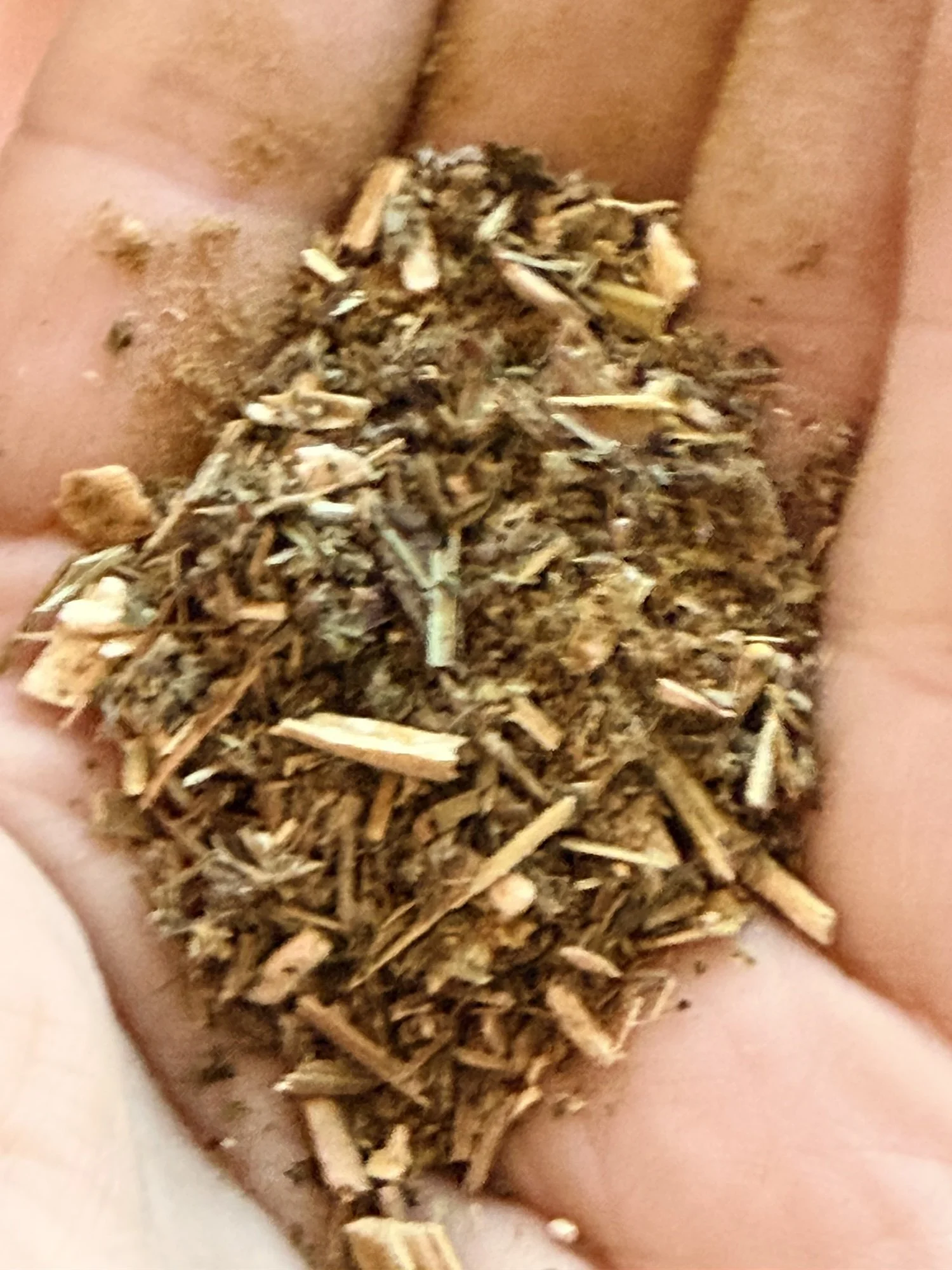
Incense blend from our Pleiades working
medicine for the body and soul
Herbs and incense
As a trained Herbalist for over 20 years, I work with herbs and incense, befitting the appropriate plant medicine the way the old astral tradition did: as offerings, as atmosphere, and as a way of telling the senses that the work has begun. I hold the sacred relationship between the Land and the Seas and the plants and animals that frequent both, even the stones.
This is altar work, and nothing I burn or blend replaces your doctor.
Prayers to the goddesses
I pray. I'm not shy about that. In my practice right now I keep hymns and prayers to Inanna, Queen of Heaven, whose star is the Morning and Evening Star; to Isis, the throne and the great mother of magic; and to Hekate at the crossroads, who carries the torches. And always to Freyja, who the North remembers as mistress of seiðr. When I sit down to work for you, I don't sit alone.
Rites, for those who are ready
Some work is a reading. Some is a rite. A rite is a working with a beginning, a middle and an end, done at a chosen time and fitted to your chart. I don't offer a rite to someone who isn't ready for one, and I'll tell you honestly if I think you aren't. Readiness isn't a price tier. It's a state.
Initiation into these deeper mysteries is done only with established clients who have done the Work, and only if divination concurs.
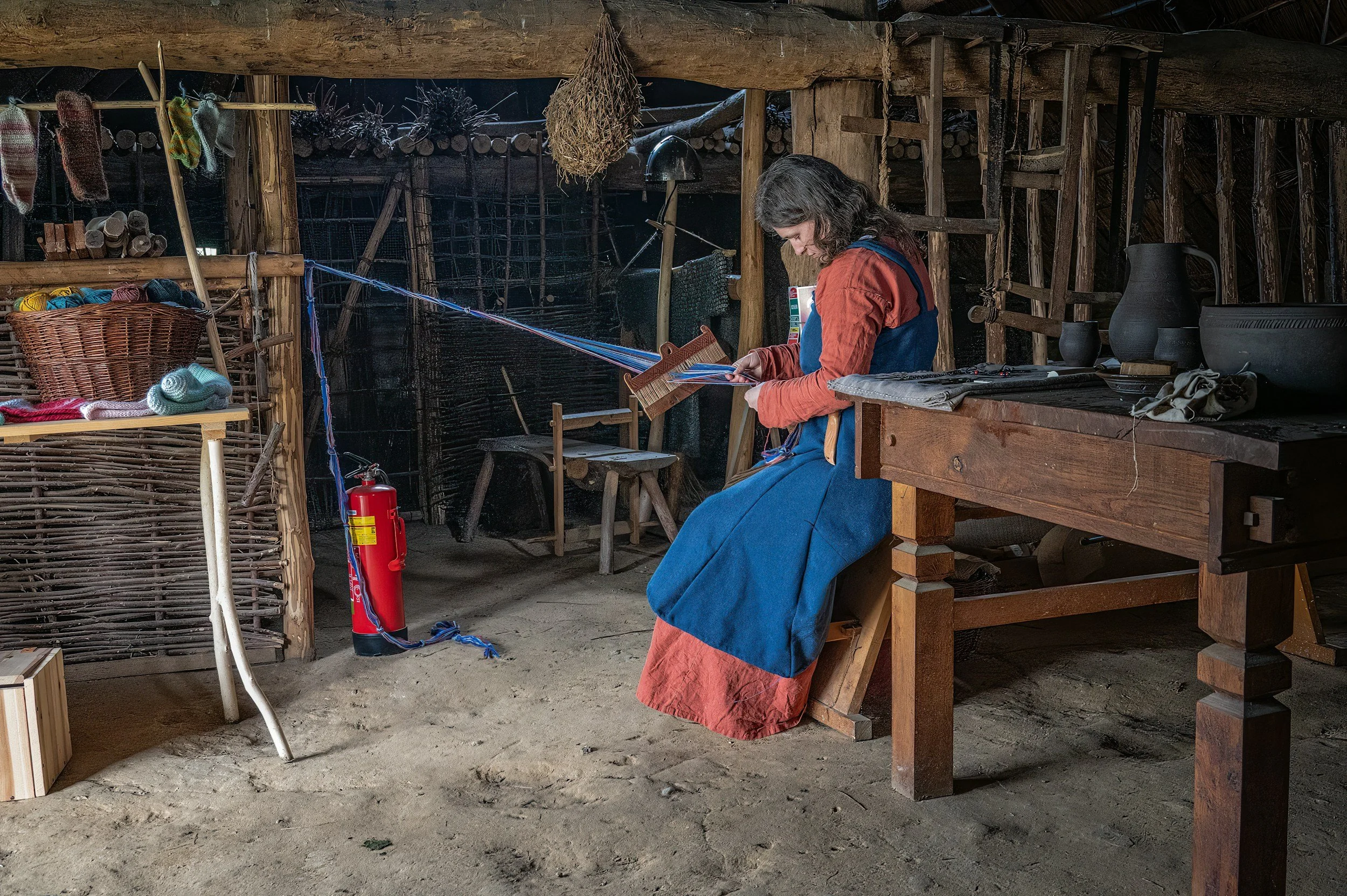
The Threads
The North pictured fate as textile. In Völuspá, the three maidens come up from the well beneath the world tree, Urðr, Verðandi and Skuld: "Laws they made there, and life allotted to the sons of men, and set their fates" (st. 20). At the birth of the hero Helgi, "Mightily wove they the web of fate ... And there the golden threads they wove, and in the moon's hall fast they made them" (Helgakviða Hundingsbana I, st. 3).
But no one weaves from nothing. Before there's a web, there's a thread, and before there's a thread, there's a woman at the distaff. The country people of southern Sweden kept her in the sky. In their old dialects, the three bright stars we call Orion's Belt were Friggerocken or Friggarocken: Frigg's rock, her distaff, the staff that holds the wool for hand-spinning. In some places they said Fröjas rock, Freyja's distaff. Look up on a clear winter night and her distaff is standing there, three stars in a row.
Every textile artist knows the order of it. First you spin: you draw the raw fibre off the distaff and twist it into thread. Then you measure: so many lengths for the warp, so many for the weft. Then you cut. Only then can you weave. Spin, measure, cut, weave. The Norns can only weave the web of fate because the spinning, the measuring and the cutting came first.
I'm a textile artist. I work with wool. I know what a snarl looks like, and I know you don't fix one by yanking on it. You find the end, ease the tension, and follow the thread back through. Sometimes you gather loose strands together into something stronger. Sometimes you untangle a knot that's been pulling the whole cloth out of true for years. Then you braid it anew.
Lately the thread keeps coming up blue, in my work and in what people bring to me. I think of Þorbjörg walking into that hall in Greenland in her blue mantle, set with stones down to the hem, and I don't think that's an accident.
blue shells
Why Builders Recognize This
I've noticed who's been finding me lately: engineers, coders, founders, mathematicians, physicists. And a great many Aquarius placements, which, let's be honest, is all of you.
I don't think it's strange. You already believe the world runs on pattern, and you know that small inputs at the right moment can matter more than large ones at the wrong moment.
The old astronomers felt the same thing. In 1619 Johannes Kepler, the same man who gave us the laws of planetary motion, wrote in Harmonices Mundi: "The heavenly motions are nothing but a continuous song for several voices, to be perceived by the intellect, not by the ear." The music of the spheres goes back to Pythagoras.
It's a place where your tradition and mine were once the same.
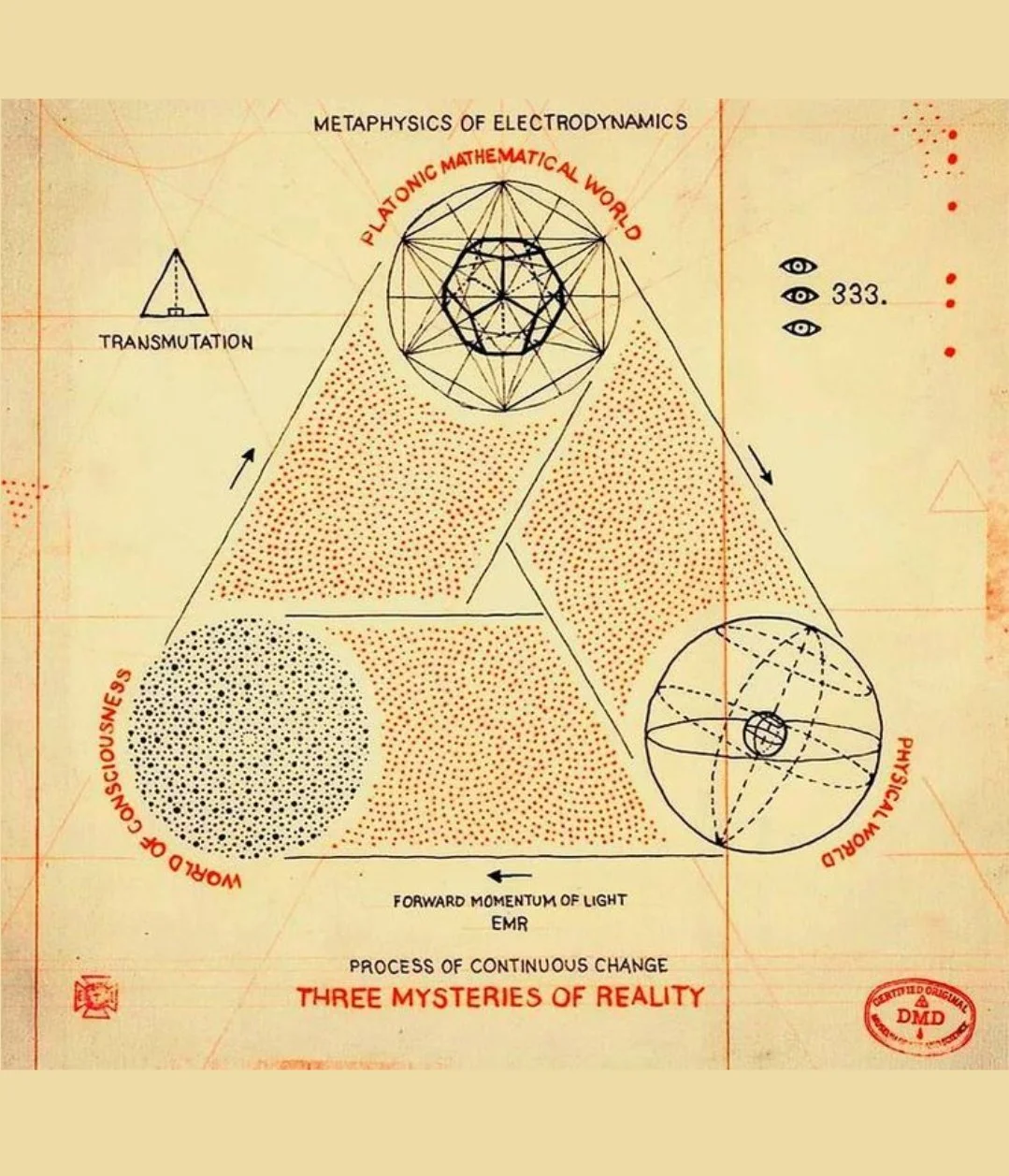
A Völva is a systems reader. Seiðr sees the structure, galdr voices it, and the craft between is the engineering.
How We Work Together
There are two ways in.
The Seiðr Session is a single sitting. We chart your threads together and find what's beneath the part you can already see. It includes a full astrological reading of your natal chart and a divination session. You'll find it here: https://www.landofseidr.com/the-crows-purseshop/p/seir-session
The Galdr & Seiðr Working holds everything in the Session, and more. You receive a card deck and a daily almanac drawn to your natal chart, personalised notes, weekly check-ins with me, and incense or other packages sent to support the work as it's needed. It runs for six months, by application. Six months gives the sky time to move through your chart and gives us time to braid something that holds. You can apply here: https://www.landofseidr.com/apply
I read every application myself and divine upon it, and that divination determines the outcome.
Both ways in, and everything else I offer, are gathered here: https://www.landofseidr.com/sessions
A Closing Word
Þorbjörg didn't hurry. She came into the hall in her blue mantle, took the high seat, and let the song come to her. When it came, she spoke.
I'm already in that seat. The mantle is blue, the threads are in my hands, and the songs are where they've always been, in the blood. I'm not waiting on anyone. The door of the hall simply stands open, and those who are meant to come will find their way in.
Freya
Sources
Eiríks saga rauða (The Saga of Erik the Red), ch. 4, tr. J. Sephton (1880), via the Icelandic Saga Database (sagadb.org).
Völuspá, st. 20, 22 and 28, tr. Henry Adams Bellows, The Poetic Edda (1936), via sacred-texts.com.
Helgakviða Hundingsbana I (First Lay of Helgi Hundingsbane), st. 2–3, tr. Bellows (1936).
Hávamál, st. 139, 141 and 147, tr. Bellows (1936).
Snorri Sturluson, Ynglinga saga ch. 7 (Heimskringla), tr. Samuel Laing (1844), via sacred-texts.com.
The Second Merseburg Charm (Old High German, 10th-century manuscript, Merseburg Cathedral Library Cod. 136), published by Jacob Grimm in 1842. The English rendering is the common one given in the Wikipedia article.
Old Norse galdr, from gala, "to sing, to call out" (etymology per standard dictionaries, summarised on Wikipedia "Galdr").
Friggerocken / Friggarocken ("Frigg's distaff"), the Swedish dialect name for Orion's Belt, with the variant Fröjas rock: Institutet för språk och folkminnen (Isof, the Swedish Institute for Language and Folklore), dialect blog, "Friggarocken eller stjärnorna i Orions bälte", Annika Karlholm, 1 Jan 2021 (isof.se). Also Nordisk familjebok (1800s edition), entry "Frigg", via runeberg.org/nfae/0199.html. Jacob Grimm also noted the name in Teutonic Mythology ch. XIII; that's per secondary sources, and I didn't check Grimm's own text.
Ghāyat al-Ḥakīm (Picatrix). Paraphrased only; Jean Seznec's summary is quoted from The Survival of the Pagan Gods, via Wikipedia "Picatrix".
Johannes Kepler, Harmonices Mundi (1619), Book V, ch. 7 (standard English rendering, quoted in Koestler's The Sleepwalkers and widely since)