Today my friend Jǫtunn Norðvegr (@JotunOutdoors) posted "Hliðskjálf - Two Sorrows And One Seat," and I quoted it the only way I could: Fiiire!
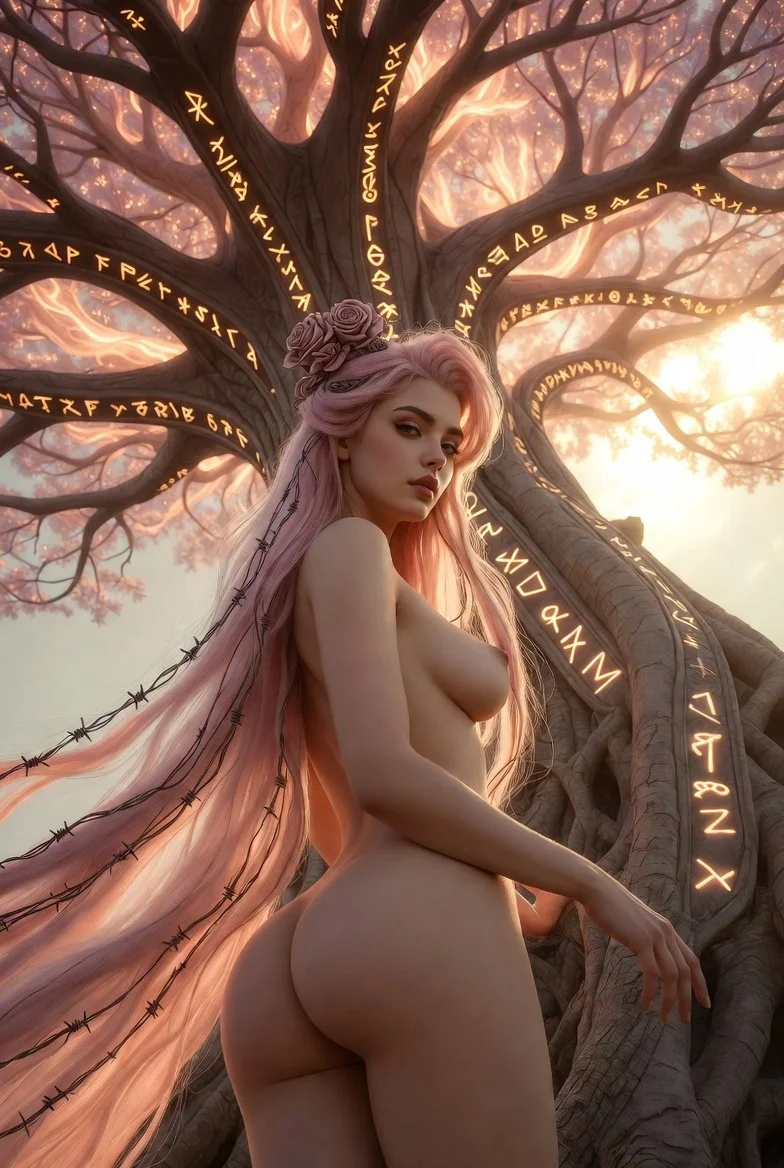
And you know what THAT means!! Hliðskjálf is the high seat Frigg and Odin share, the seat they sit in to look out over all the worlds. That high seat IS the far-seeing. That's what the völva's seat is. It is the original seat of the völva. The goddess is a völva. She is the first seeress, and every völva since sits in her seat.
The far-seeing
The old prose that opens Grímnismál puts them there together. Bellows translates it:
"Othin and Frigg sat in Hlithskjolf and looked over all the worlds."
One seat. They look out together. That's the far-seeing, right there in the old poem.
When we come to Snorri, we take him with a grain of salt. A huge one. Gylfaginning and the Ynglinga saga are heavily Christianized retellings. They are Snorri's own view of the gods and of the old stories. Pagans, and people who live in Iceland, take those stories that way. I quote him anyway. Even through his lens, the high seat is sitting there in plain sight.
Snorri names the place in Gylfaginning chapter IX:
"There is one abode called Hlidskjálf, and when Allfather sat in the high-seat there, he looked out over the whole world and saw every man's acts, and knew all things which he saw." (tr. Arthur Gilchrist Brodeur)
His wife is named in the next breath: Frigg, daughter of Fjörgynn. Then in chapter XX:
"Frigg is his wife, and she knows all the fates of men, though she speaks no prophecy."
She sees, and she holds what she sees. That's a völva.
She is a völva
Freyja is the one who says it, in Lokasenna stanza 29, and she says it of Frigg:
"The fate of all | does Frigg know well,
Though herself she says it not." (tr. Henry Adams Bellows)
They're tied to the goddess because she IS a völva!! The first one. The one who sees across the worlds, with the threads of wyrd in her hands.
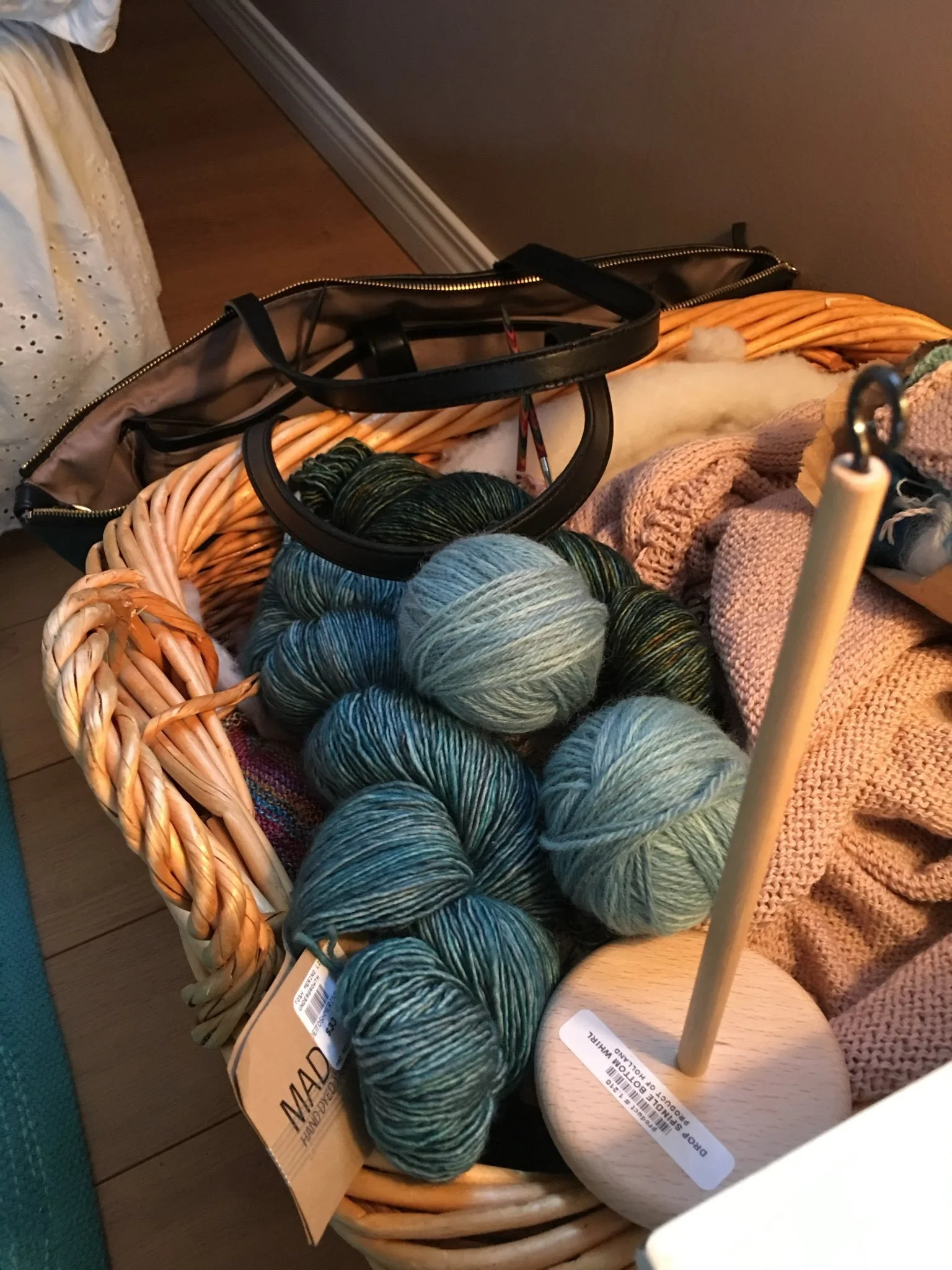
Look up on a clear winter night, love. The country people of Sweden kept her distaff in the sky. In their old dialects, the three bright stars we call Orion's Belt were Friggerocken, Frigg's rock, the staff that holds the wool for hand-spinning. In some places the lore calls it Fröjas rock, Freyja's distaff. Three stars in a row, still carrying the wool, right there beside the seat of seeing.
What has come down through seeing
We have so little of the old Norse ways that was actually passed down. These stories were written down after the North had already been Christianized. A lot of reconstructionism is guesswork, too. What I do has come down through seeing, through revelation. That seeing stands right beside the old sources, and any other source. That's WHY the völva matters NOW.
Snorri, still with that grain of salt, says in Ynglinga saga chapter 4 that Freyja brought this art among the gods. Laing's English:
"Njord's daughter Freya was priestess of the sacrifices, and first taught the Asaland people the magic art, as it was in use and fashion among the Vanaland people."
That magic art is seiðr. Snorri says "taught." I say it was carried. It comes down in the blood. It was already mine. Not everyone can do the völva's work. This is a bloodright.
In chapter 7, he says Odin practised it too:
"Odin understood also the art in which the greatest power is lodged, and which he himself practised; namely, what is called magic. By means of this he could know beforehand the predestined fate of men, or their not yet completed lot." (tr. Laing)
He sat in the high seat with her. The seeing is hers first.
The seat in the hall
Around the year 1000, in Greenland, a woman still goes up into that seat. Eiríks saga rauða chapter 4 tells of Þorbjörg, called Litilvolva, the little völva, the only one still living of nine sisters who were all seeresses. The franklin prepared a place for her, in Sephton's translation:
"A high seat was prepared for her, and a cushion laid thereon in which were poultry-feathers."
She came in a blue mantle, with a staff in her hand. She slept first. The next day she went up. The women formed a ring, and "Thorbjorg ascended the scaffold and the seat prepared for her enchantments." Guðríðr sang the Weird-songs, "in so beautiful and excellent a manner, that to no one there did it seem that he had ever before heard the song in voice so beautiful as now." Then Þorbjörg said:
"And now are many things clear to me which before were hidden both from me and others."
The raised platform is the seiðhjallr. She went up into the goddess's seat, into the far-seeing, and the hidden things came clear.
The seat is kept
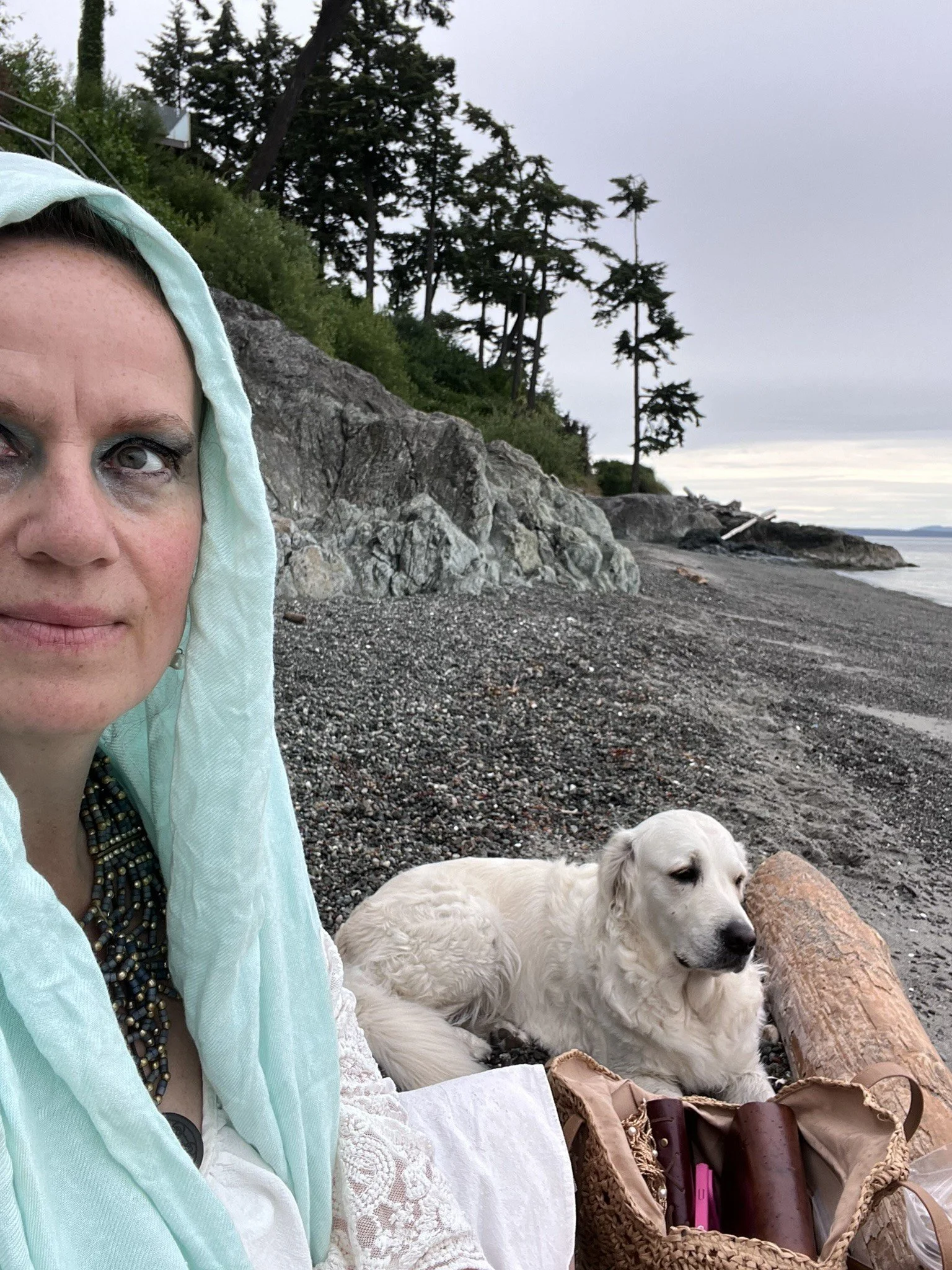
Today I kept the high seat. A door that wasn't meant for me stayed closed. Those that are meant to be, will be. Other doors that aren't meant for us remain closed. Not everyone is meant for ME. Then this poem arrived, of two who sit together and look out, and of the one who knows and holds what she knows. That's a blessing on the seat itself.
I am already in that seat. The mantle is blue. The songs are in the blood. The far-seeing is here.
What I offer, love, is to sit with the völva. The völva's work itself stays in the blood, in this office. If you feel called to sit with me, the Völva seats are open by application through Venus' Day, November 27. Initiation into these deeper mysteries is done only with established clients who have done the Work, and only if divination concurs.
Sources
Jǫtunn Norðvegr (@JotunOutdoors), "Hliðskjálf - Two Sorrows And One Seat," 25 November 2026: https://x.com/JotunOutdoors/status/2125489284819955774. Quoted by Freya's Flame (@FreyasFlame_9): https://x.com/FreyasFlame_9/status/2125606457941144040.
Grímnismál, introductory prose, tr. Henry Adams Bellows, The Poetic Edda (1923), via sacred-texts.com.
Snorri Sturluson, Gylfaginning chs. IX and XX, tr. Arthur Gilchrist Brodeur, The Prose Edda (1916), via sacred-texts.com.
Lokasenna st. 29, tr. Bellows (1923).
Snorri Sturluson, Ynglinga saga chs. 4 and 7 (Heimskringla), tr. Samuel Laing (1844), via sacred-texts.com.
Eiríks saga rauða ch. 4, tr. J. Sephton (1880), via the Icelandic Saga Database (sagadb.org).
Friggerocken / Fröjas rock (Frigg's or Freyja's distaff), the Swedish dialect name for Orion's Belt: Annika Karlholm, "Friggarocken eller stjärnorna i Orions bälte," Institutet för språk och folkminnen (Isof), 1 January 2021; Jacob Grimm, Teutonic Mythology, tr. J. S. Stallybrass, ch. XIII (Frejerock / Fröjas rock).