 Image 1 of 4
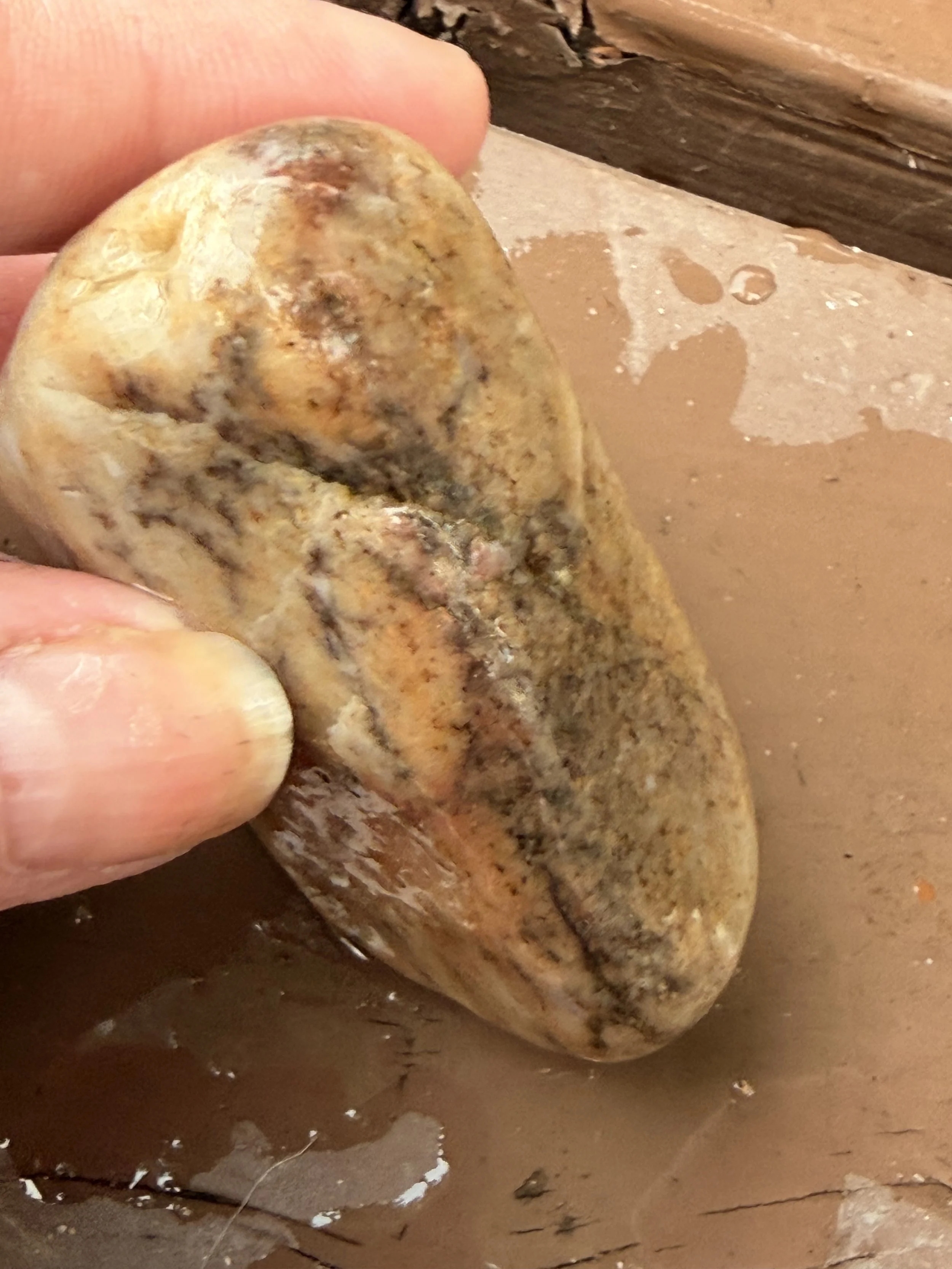 Image 2 of 4
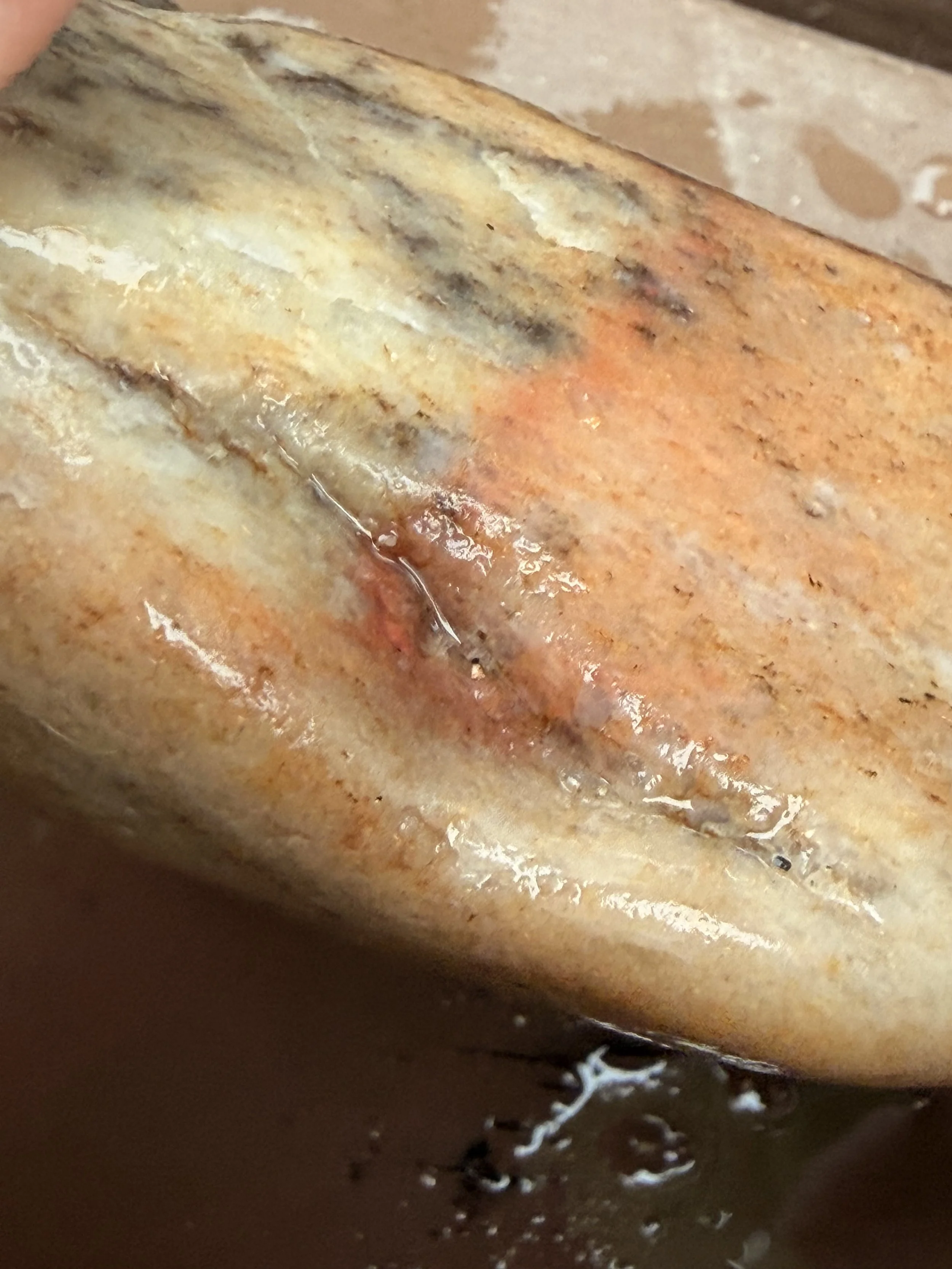 Image 3 of 4
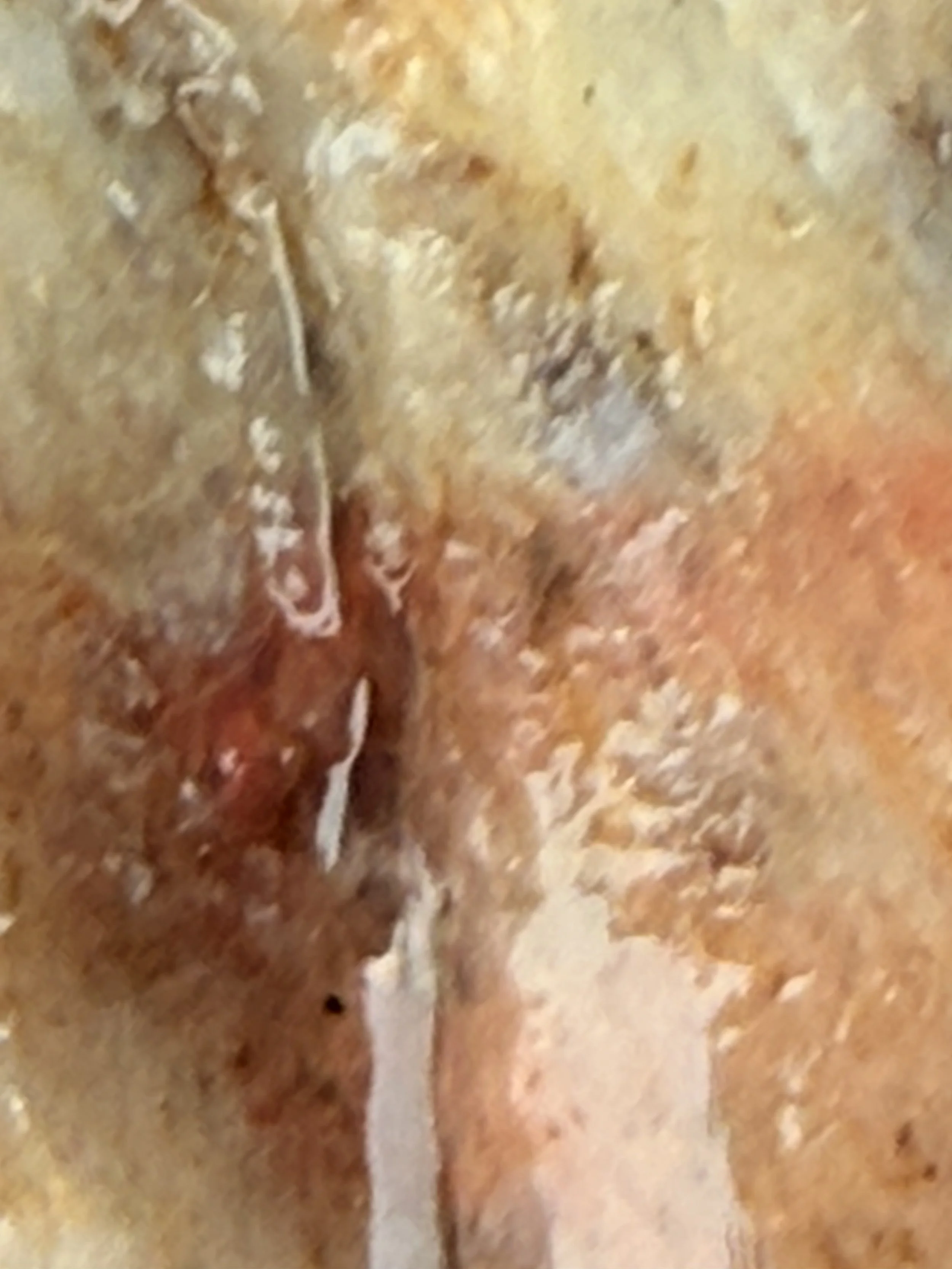 Image 4 of 4
River Quartzite – Kettle River
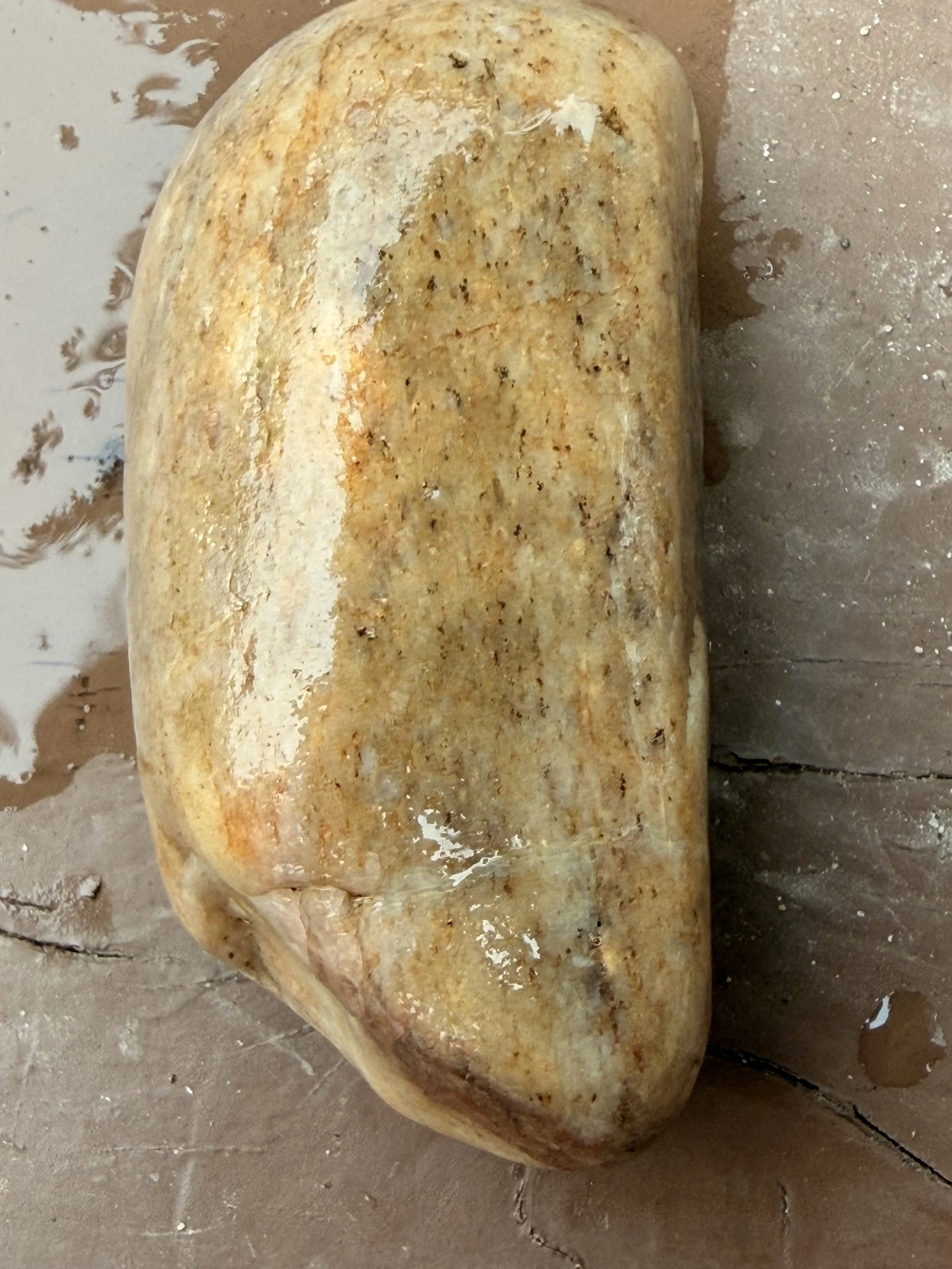
An elongated, river-worn quartzite with soft creamy-to-beige body and rich pink-to-red iron staining that runs through the surface and into the stone. The form is long and tapered, smooth from the water, with subtle linear banding still visible beneath the colour.
Pulled from the Kettle River in Grand Forks, British Columbia. The Kettle River is a tributary of the great Columbia. Its waters travel south and east before joining the Columbia and continuing the long journey to the Pacific Ocean. This is a distinct watershed from those the mage has collected from before — a different river system that still answers to the same ocean mothers at the end of its path.
Quartzite is pure, dense, and clarifying. It amplifies and steadies whatever current it is given. The strong pink-red iron staining adds a quiet warmth and vitality without dulling the stone’s clarity. The colour is staining rather than a separate mineral, yet it has soaked deep enough to become part of the stone’s character.
Over the past several months this stone has been included in multiple lunar workings and bound in rootwork by the mage. While it is not a talismanic piece in the formal astrological tradition, it has been magically charged and now carries her lunar current. The mage holds living relationship with Rán and her nine daughters, the wave-maidens of the North. In the old lore, Rán is the goddess who casts her net across the sea and claims those who drown. Her name carries the sense of robbery or taking — she does not ask. Those she takes are received into the hall she shares with Ægir beneath the waves, where the drowned are guests at the feasts. Gold was sometimes carried into the water so that one would not arrive empty-handed at her table. The hospitality of that hall is legendary; the drowned continue there as guests under her claim.
In this there is a striking parallel with Freyja: both are hostesses of the dead and keepers of great halls of feasting. The difference lies mainly in the selection. Freyja chooses from those who fall in battle and have not drowned; Rán takes those the sea itself claims. Both receive, both host, both feast the dead under their own right.
Uncut. Unpolished. Still carrying the memory of the river, the lunar workings, the wave-maidens, and the quiet clarifying fire of quartz.
Offered as an individual ritual stone.
River Quartzite – Kettle River
An elongated, river-worn quartzite with soft creamy-to-beige body and rich pink-to-red iron staining that runs through the surface and into the stone. The form is long and tapered, smooth from the water, with subtle linear banding still visible beneath the colour.
Pulled from the Kettle River in Grand Forks, British Columbia. The Kettle River is a tributary of the great Columbia. Its waters travel south and east before joining the Columbia and continuing the long journey to the Pacific Ocean. This is a distinct watershed from those the mage has collected from before — a different river system that still answers to the same ocean mothers at the end of its path.
Quartzite is pure, dense, and clarifying. It amplifies and steadies whatever current it is given. The strong pink-red iron staining adds a quiet warmth and vitality without dulling the stone’s clarity. The colour is staining rather than a separate mineral, yet it has soaked deep enough to become part of the stone’s character.
Over the past several months this stone has been included in multiple lunar workings and bound in rootwork by the mage. While it is not a talismanic piece in the formal astrological tradition, it has been magically charged and now carries her lunar current. The mage holds living relationship with Rán and her nine daughters, the wave-maidens of the North. In the old lore, Rán is the goddess who casts her net across the sea and claims those who drown. Her name carries the sense of robbery or taking — she does not ask. Those she takes are received into the hall she shares with Ægir beneath the waves, where the drowned are guests at the feasts. Gold was sometimes carried into the water so that one would not arrive empty-handed at her table. The hospitality of that hall is legendary; the drowned continue there as guests under her claim.
In this there is a striking parallel with Freyja: both are hostesses of the dead and keepers of great halls of feasting. The difference lies mainly in the selection. Freyja chooses from those who fall in battle and have not drowned; Rán takes those the sea itself claims. Both receive, both host, both feast the dead under their own right.
Uncut. Unpolished. Still carrying the memory of the river, the lunar workings, the wave-maidens, and the quiet clarifying fire of quartz.
Offered as an individual ritual stone.