 Image 1 of 2
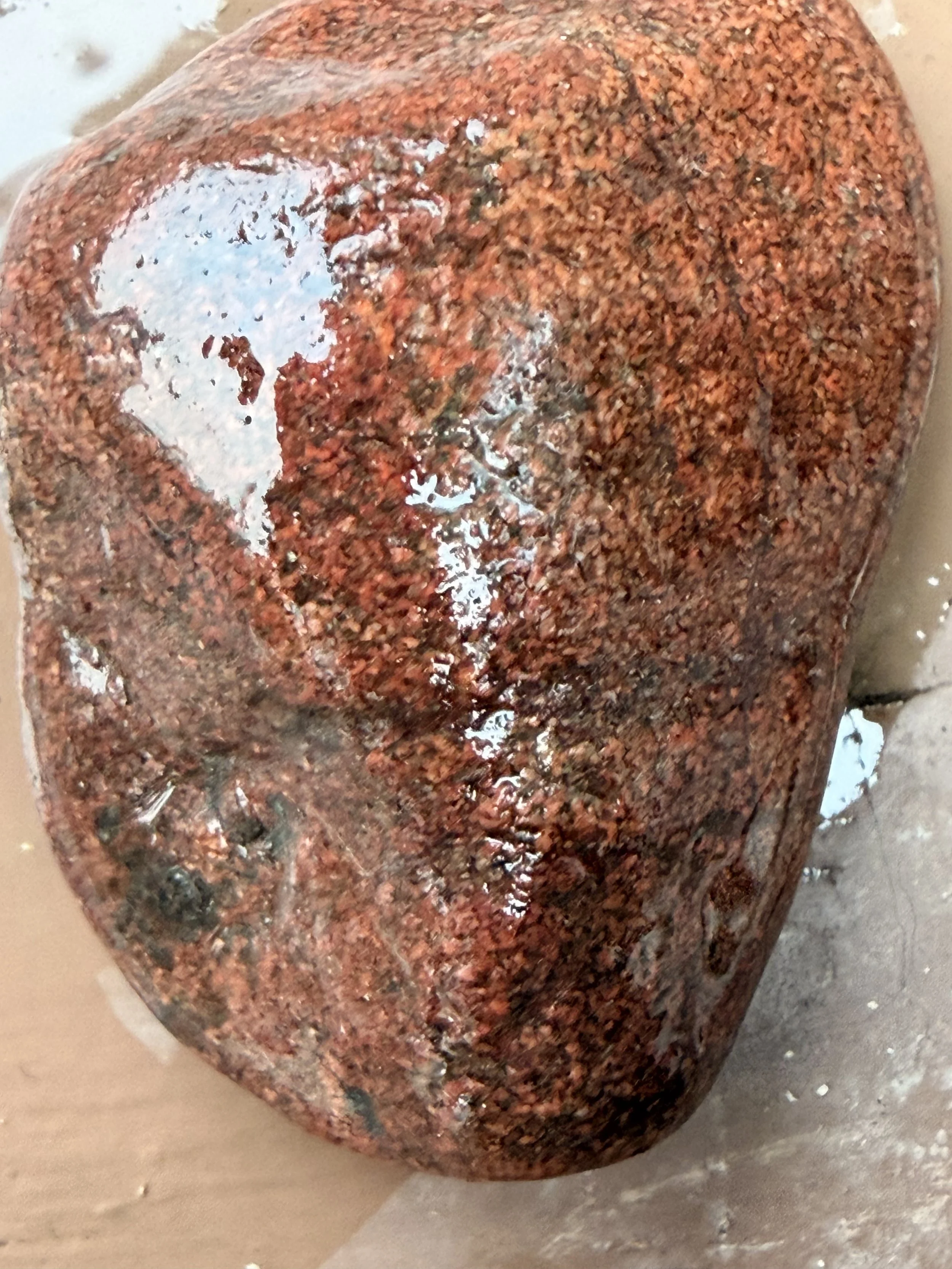 Image 2 of 2
River Granite – Kettle River
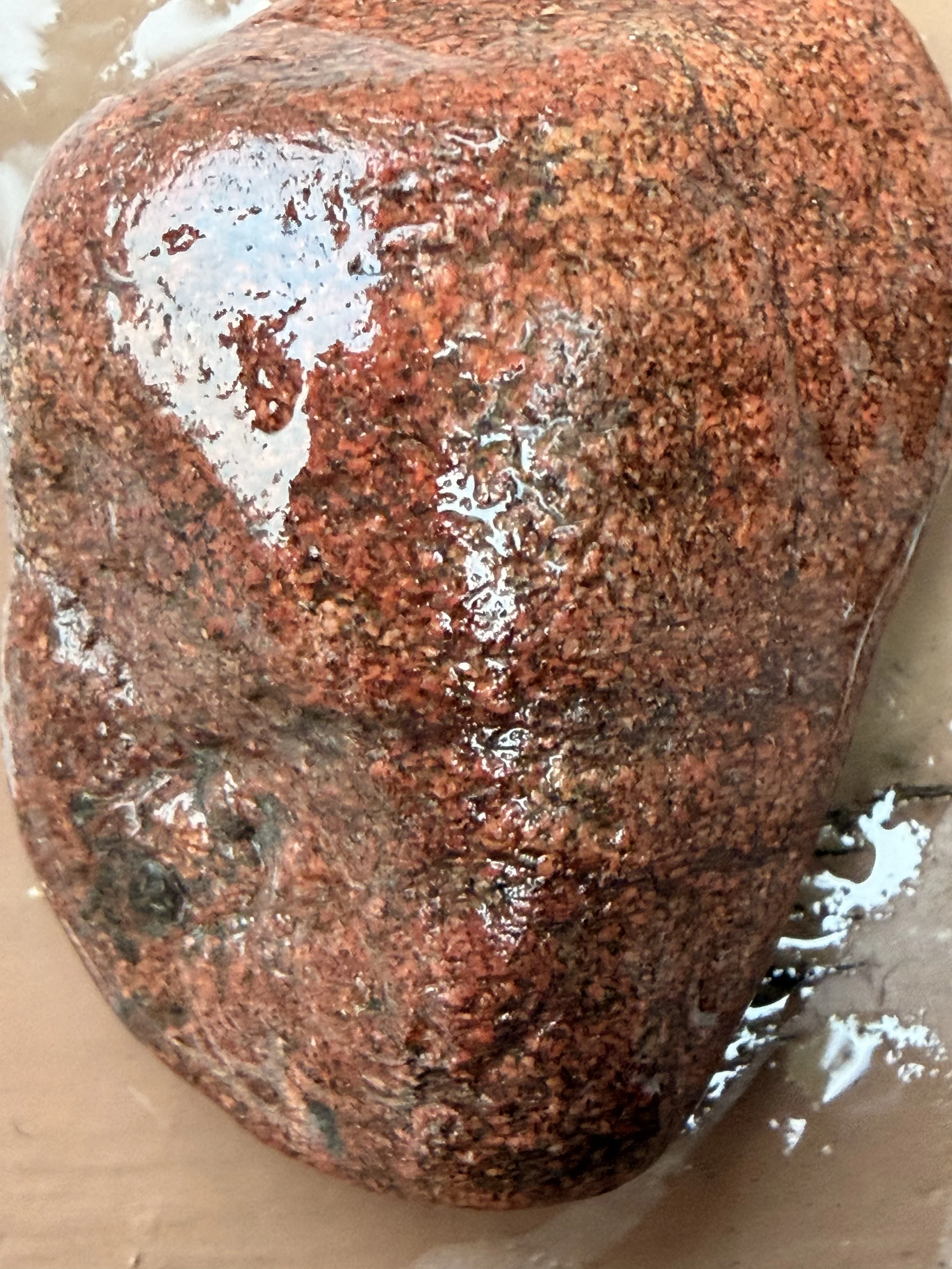
Exceptional specimens of river-worn granite, left entirely in their natural state. These pieces carry the deep structural strength of the land they were born from.
Pulled from the Kettle River in Grand Forks, British Columbia. The Kettle River is a tributary of the great Columbia. Its waters travel south and east before joining the Columbia and continuing the long journey to the Pacific Ocean. This is a distinct watershed from those the mage has collected from before — a different river system that still answers to the same ocean mothers at the end of its path.
These stones come from the high-grade metamorphic and intrusive rocks of the Grand Forks Complex, a fault-bounded window of deep crustal material brought to the surface along the Kettle River fault system. They are the literal bones of this place — dense, crystalline, and forged under pressure.
Granite is a stone of structure, endurance, and ancestral strength. It anchors, stabilizes, and holds steady through intensity. The visible crystal clusters within these pieces add a quiet crystalline current to the dense body of the rock.
Over the past several months these stones have been included in multiple lunar workings and bound in rootwork by the mage. While they are not talismanic pieces in the formal astrological tradition, they have been magically charged and now carry her lunar current alongside their natural structural force. The mage holds living relationship with Rán and her nine daughters, the wave-maidens of the North. In the old lore, Rán is the goddess who casts her net across the sea and claims those who drown. Her name carries the sense of robbery or taking — she does not ask. Those she takes are received into the hall she shares with Ægir beneath the waves, where the drowned are guests at the feasts. Gold was sometimes carried into the water so that one would not arrive empty-handed at her table. The hospitality of that hall is legendary; the drowned continue there as guests under her claim.
In this there is a striking parallel with Freyja: both are hostesses of the dead and keepers of great halls of feasting. The difference lies mainly in the selection. Freyja chooses from those who fall in battle and have not drowned; Rán takes those the sea itself claims. Both receive, both host, both feast the dead under their own right.
Uncut. Unpolished. Still carrying the memory of deep earth and rushing water. The lunar charge binds them to ancestral lines and to the work of timeline-weaving and creation. The crystal clusters within hold and amplify the lunar current, carrying the deep secrets of the water and of the Moon herself.
Offered as individual ritual stones.
River Granite – Kettle River
Exceptional specimens of river-worn granite, left entirely in their natural state. These pieces carry the deep structural strength of the land they were born from.
Pulled from the Kettle River in Grand Forks, British Columbia. The Kettle River is a tributary of the great Columbia. Its waters travel south and east before joining the Columbia and continuing the long journey to the Pacific Ocean. This is a distinct watershed from those the mage has collected from before — a different river system that still answers to the same ocean mothers at the end of its path.
These stones come from the high-grade metamorphic and intrusive rocks of the Grand Forks Complex, a fault-bounded window of deep crustal material brought to the surface along the Kettle River fault system. They are the literal bones of this place — dense, crystalline, and forged under pressure.
Granite is a stone of structure, endurance, and ancestral strength. It anchors, stabilizes, and holds steady through intensity. The visible crystal clusters within these pieces add a quiet crystalline current to the dense body of the rock.
Over the past several months these stones have been included in multiple lunar workings and bound in rootwork by the mage. While they are not talismanic pieces in the formal astrological tradition, they have been magically charged and now carry her lunar current alongside their natural structural force. The mage holds living relationship with Rán and her nine daughters, the wave-maidens of the North. In the old lore, Rán is the goddess who casts her net across the sea and claims those who drown. Her name carries the sense of robbery or taking — she does not ask. Those she takes are received into the hall she shares with Ægir beneath the waves, where the drowned are guests at the feasts. Gold was sometimes carried into the water so that one would not arrive empty-handed at her table. The hospitality of that hall is legendary; the drowned continue there as guests under her claim.
In this there is a striking parallel with Freyja: both are hostesses of the dead and keepers of great halls of feasting. The difference lies mainly in the selection. Freyja chooses from those who fall in battle and have not drowned; Rán takes those the sea itself claims. Both receive, both host, both feast the dead under their own right.
Uncut. Unpolished. Still carrying the memory of deep earth and rushing water. The lunar charge binds them to ancestral lines and to the work of timeline-weaving and creation. The crystal clusters within hold and amplify the lunar current, carrying the deep secrets of the water and of the Moon herself.
Offered as individual ritual stones.